




Explore the role of raw honey in functional nutrition. Learn about the antioxidant properties and synergy of premium...














📚 Beekeeping Management
Overwintering Honey Bees: From Spring Memories to Winter Survival
Here we are, in the spring of 2026. Last winter is now just a fading memory. Do you remember those warm early days when the bees—and you—were busy producing and storing honey? While we were enjoying the honey from our hives, the bees back in late spring were already preparing for swarming events and starting to gather their future winter reserves. The annual life cycle of bees is circular. Last spring, the bees had already stored the food for this winter season!
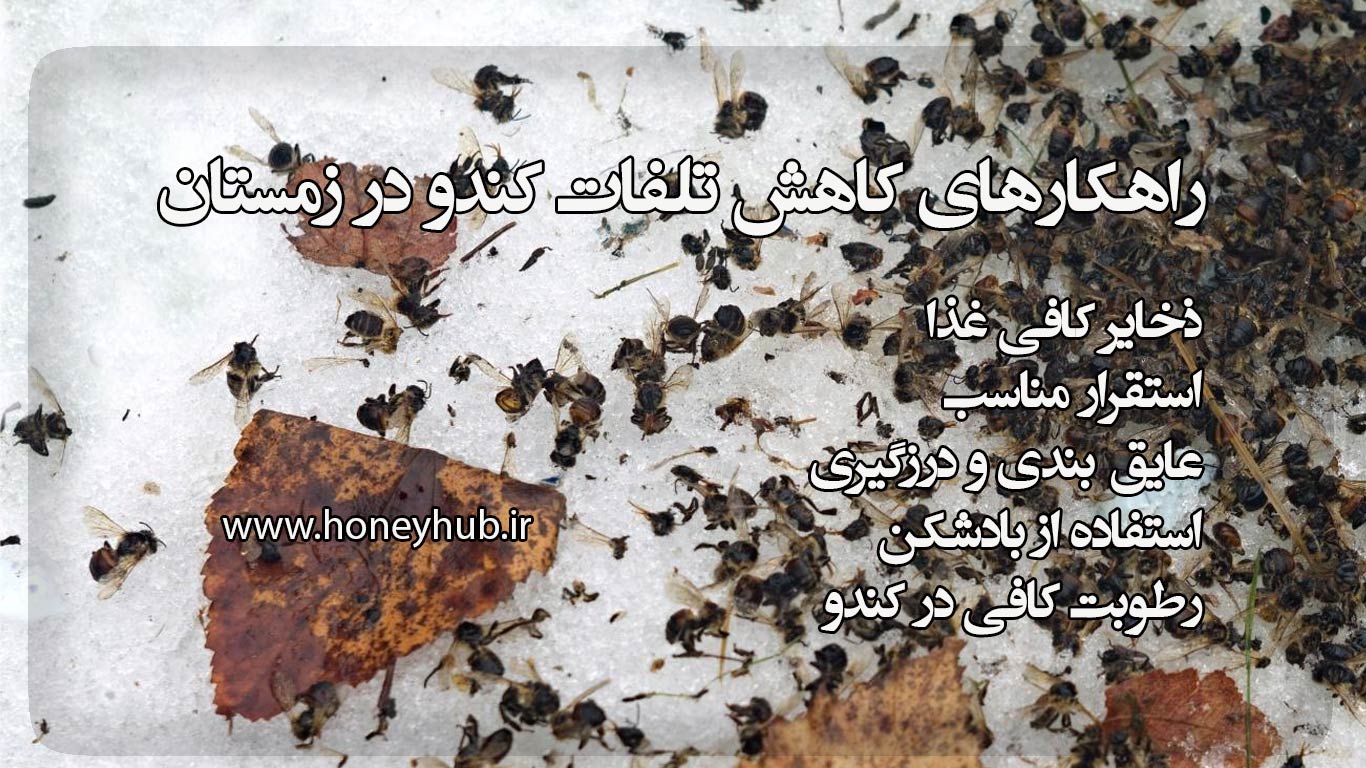
For us beekeepers, winter is a quiet season. It's a time when we read, prepare, and reflect. But for the bees, it's the season of the great dying. Their survival depends on the honey reserves they've set aside!
📊 Shocking Winter Loss Statistics
62%
Winter losses 2024-2025 in commercial US colonies
30-40%
Average losses in Iranian apiaries
80%
Preventable with proper management
Based on 2024-2025 reports, winter honey bee losses in many regions have reached historic highs. This means proper overwintering management is no longer a choice—it's a necessity. (Source)
What Affects Honey Bee Colony Survival in Winter?
Both external and internal factors influence a colony's ability to survive winter. The main external factor affecting survival is weather. Winters vary significantly—they can be wet and cold, dry and cold, wet and mild, dry and mild, windy, icy, and so on. It's crucial to choose the right location for your hives, ensure they're in good condition, have proper ventilation, and maintain adequate honey reserves. All of these can be easily optimized by the beekeeper and should be done while daytime temperatures are still above 50°F (10°C), because opening hives in cold weather is stressful at best and lethal at worst.
⚠️ Critical Note:
It's important to select the right location for your hives, make sure they're in good condition, have proper ventilation, and leave enough honey reserves in the hive. All of these can be easily optimized by the beekeeper and should be done while daytime temperatures are still above 50°F (10°C), since opening colonies in cold weather is stressful at best and lethal at worst.
Choosing the Right Location and Windbreaks
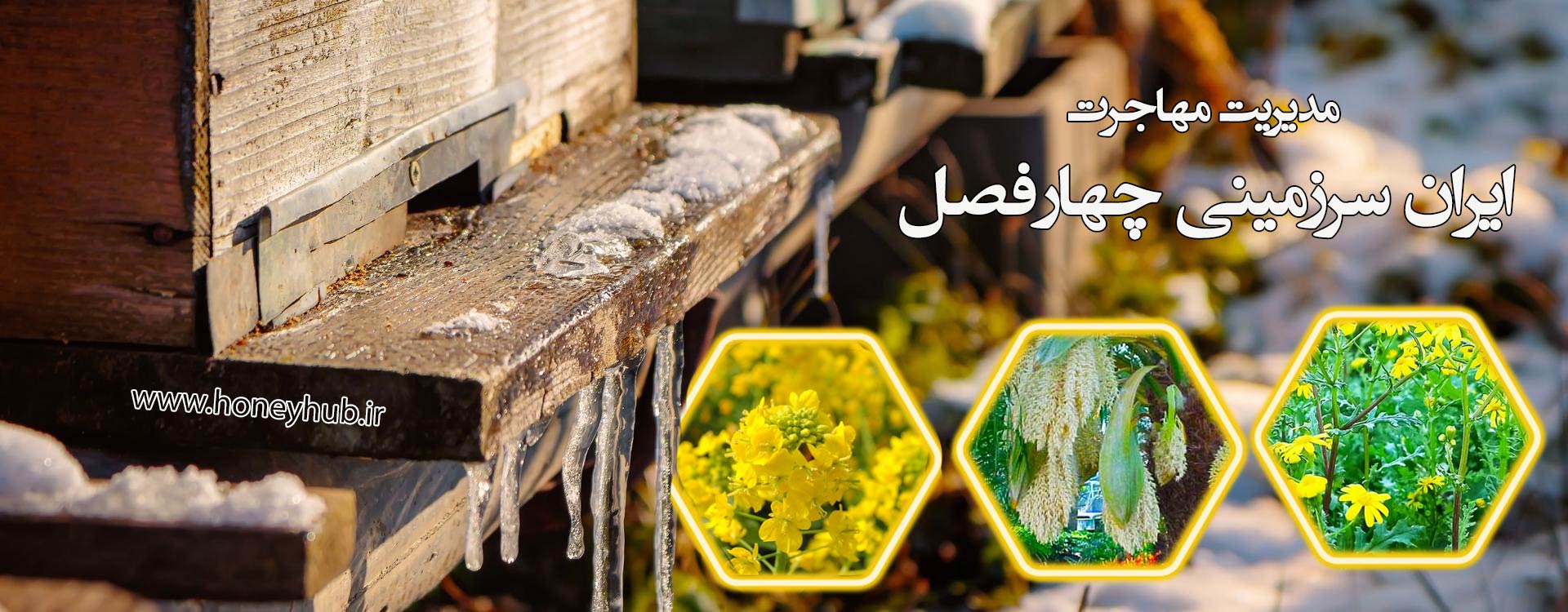
When selecting a location for your hives, make sure they're not placed in low-lying areas where moist air might collect and temperatures drop below the surrounding environment. Determine the prevailing wind direction and create a windbreak. This can be as simple as placing hives along a tree line. Alternatively, you can set up a simple temporary windbreak using canvas, tarp, snow fence, or reeds.
Windbreaks generally reduce wind speed, and on the leeward side, wind speed is reduced up to 30 times the height of the windbreak. Within this zone, the density of the windbreak affects how much wind is reduced. The more solid the windbreak, the less wind passes through. If the windbreak is too dense (like a solid building), low pressure forms on the leeward side, creating turbulence that reduces wind protection.
| Windbreak Type | Density (%) | Protection Range | Efficiency |
|---|---|---|---|
| Optimal windbreak | 40-60 | Up to 30x height | Maximum protection |
| Too dense windbreak | Over 70 | Less than 15x | Creates turbulence |
| Too light windbreak | Less than 30 | Less than 10x | Insufficient protection |
A windbreak density of 40 to 60 percent provides the most protection against wind. If you plan to create a permanent windbreak for your hives, seek guidance from old-timers, experienced beekeepers, and structural engineers.
Preventing Animal Damage and Vandalism!
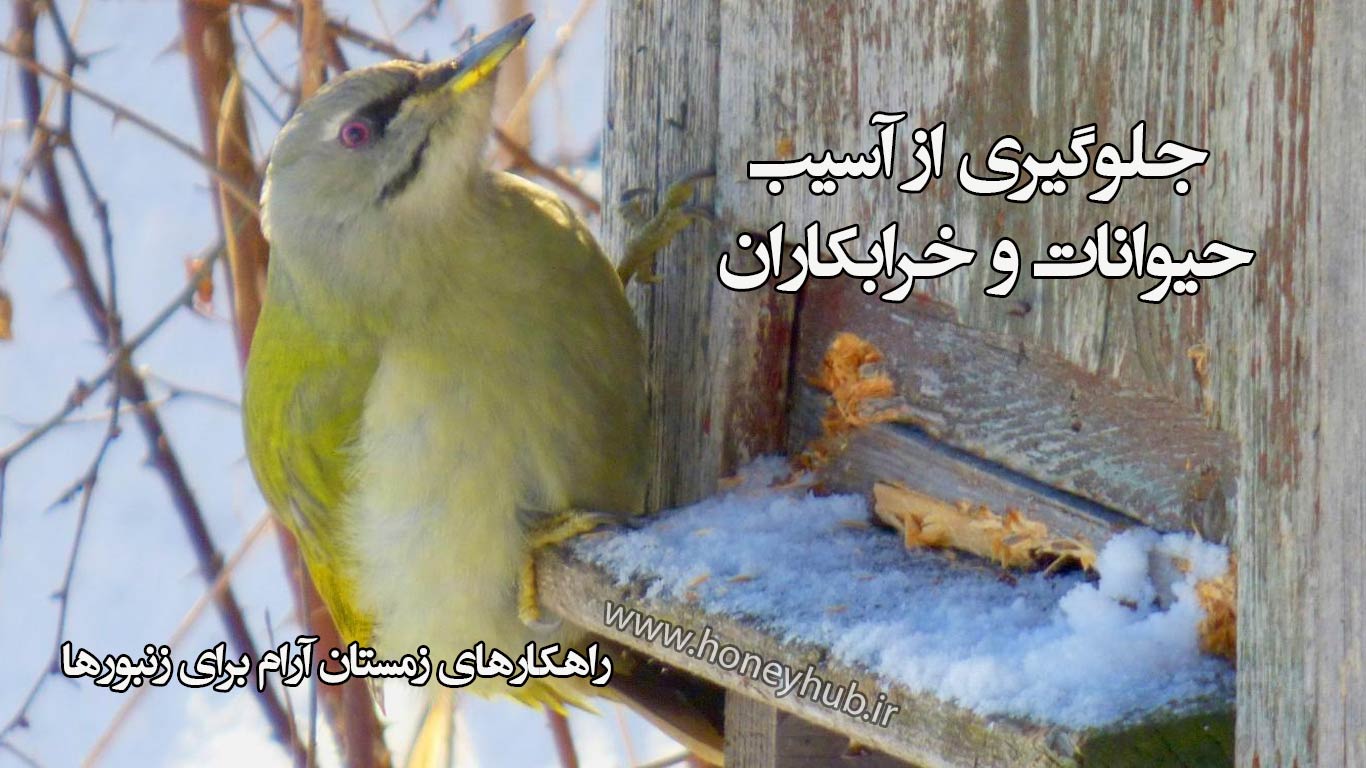
Animal damage and vandalism are problems you need to be aware of and protect your hives against. In fall, mice start searching for warm, cozy places to spend the winter. When bees begin clustering, they can crawl in through your lower hive entrances since they're not "at the door" to chase away intruders.
🐭 Protecting Against Mice:
- Install mouse guards on your lower entrances
- To prevent mice from destroying your frames and eating your clustered bees, use metal mesh
- Good commercial options are available, or you can easily build your own hardware cloth barriers
- The guard height should be at least three times the hive entrance height
- Fold it in the middle and press it toward the entrance
- Raising hives on stands is also helpful
🦝 Larger Animals (Weasels, Raccoons):
Other animals that can damage your hives in winter include weasels and raccoons. These pests chew through entrances, and raccoons can even pry open outer covers. You can prevent this by strapping hives to their stands. Consider using a quick-release strap that makes winter hive inspections easier.
🐻 Protecting Against Bears:
Bears live in most of our regions. They're mainly problematic in spring, summer, and fall when they're active. However, during mild winters, they can still pose a threat to hives. Once bears find your hives, it's not easy to deter them from completely destroying your colonies. So if you know bears are in your area, you need to install an electric fence around your apiary.
Some beekeepers, when they know bears are active in the area, hang strips of meat on the live electric fence around their apiary. Since bears' thick fur and skin protect most of their body, their nose is almost the only part of their anatomy that can be painfully shocked by electric current. By encouraging the bear to sniff the fence and get zapped on the nose, a clear message gets through: Stay away!!
⚡ Electric Fence Technical Note:
For electric fences, you should use specialized wildlife energizers that produce momentary high-voltage pulses with very low amperage (safe). This type of shock doesn't seriously harm the animal, but because of the bear's highly sensitive nose, it delivers a clear message. Never use mains electricity or dangerous power sources.
🚨 Preventing Vandalism and Theft:
There's not much you can do to prevent vandals except marking the area around your hives (and consider labeling your hives using nailed signs, brands, carvings, or simply writing on them). Strapping hives can help since most vandals aren't risk-takers, so they're less likely to hang around a securely fastened hive.
Of course, there are many ways to prevent theft. If you're willing to spend a bit, you can place tracking devices inside your hives that might be useful if they're stolen. Or you can go the old-fashioned route: get several beekeepers together and have a guard—that helps a lot. Just make sure to choose a beekeeper whose hives are free of disease or mites!
⚠️ Serious Security Warning:
In some provinces, armed robbery has unfortunately been reported. Try not to carry valuables with you to your beekeeping camp. Carry at least a simple, inexpensive mobile phone to stay safe from these dangerous individuals. And try to be in a group with several beekeepers, setting up your hives in areas where these criminals don't have a history of presence.
Thorough Hive Inspection
Your hive components must be tightly connected. Bees don't heat the hive—they only heat their cluster. Drafts can pull heat away from the bee cluster and kill them. If you have old, warped brood boxes or boxes showing tool damage, these boxes have gaps that can potentially create lethal drafts in bad weather.
Even small gaps between hive boxes can allow too much air to pass through the hive. Gaps between hive bodies mean you need to wrap your hives to ensure bees don't have to deal with draft conditions. While wrapping a tight hive isn't critical, wrapping a well-sealed hive will still be beneficial.

Honey Bee Winter Clustering
In preparing for the upcoming winter season, the beekeeper's goal is to help the colony prepare for winter as much as possible. Although the biology of honey bee overwintering is an amazingly complex system of temperature and humidity regulation methods, the main method is nothing more than a group of cold-blooded animals (bees) gathering together to collect their heat (clustering). They're not in hibernation.
🔬 Scientific Facts About Clustering:
- Clustering begins: At around 64°F (18°C)
- Outer cluster edge temperature: About 55°F (13°C)
- Cluster center temperature (brood nest): About 95°F (35°C)
- Minimum survival temperature: Healthy colonies can withstand temperatures down to 25°F (-4°C)
The honey bee cluster in winter forms actively to control the environment when ambient temperature drops below what they can tolerate as individual bees. At around 50°F (10°C), individual bees have limited capacity to respond to low temperatures and become increasingly inactive. Although solitary bees can live for a long time, if kept at temperatures much below 45-50°F (7-10°C), they die. Honey bees rely on the sugar in honey as their energy source. As temperature drops, sugar absorption in the honey bee's gut becomes increasingly limited. Eventually, the chilled bee dies of starvation.
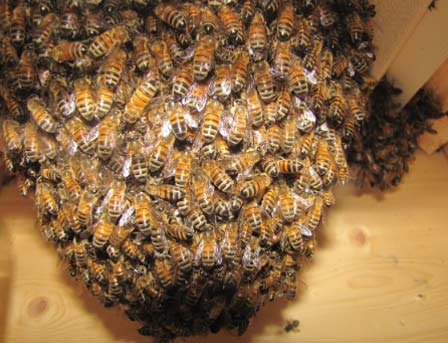
The winter cluster generates heat through tiny muscle vibrations or by flexing flight muscles—movements so small they're invisible. As beekeepers, we often think bees have a special ability to produce heat, but in reality, many insects can generate heat as easily as honey bees. The honey bee's talent lies in controlling heat production over long periods. As long as they're well-fed, developing honey bee larvae are also excellent cluster heat producers. The clustering behavior of adult bees and developing bees essentially turns the bee colony into one larger animal rather than a collection of many smaller ones.
The cluster of bees in an average colony forms a generalized spherical shape. When a colony gets cold, clustering becomes apparent at around 64°F. A distinct cluster forms at 64°F (18°C), but there may still be small satellite clusters near the main cluster. At around 32°F (0°C), most bees should be in the main cluster. The temperature at the outer cluster edge is maintained at about 55°F (13°C) while the brood nest in the cluster center is maintained at about 95°F (35°C).
As ambient temperature drops, a cluster has two ways to maintain its temperature: cluster contraction and increased heat production. Cluster contraction reduces surface area and increases the insulating capability of the bees' outer shell. To maintain controlled temperatures, the cluster expands or contracts based on ambient temperature. As temperature drops below 41°F (5°C), cluster compaction reaches its maximum. Increasingly, bees inside the cluster must generate more heat by flexing their flight muscles. It's been reported that healthy colonies with good honey reserves can withstand low temperatures of 25°F (-4°C) for extended periods.

Food Reserves
Established recommendations call for 88-90 pounds of honey, or ripened sugar syrup, for the survival of strong colonies from October through April in northern regions, mountainous areas, and cold climates. This amount includes winter consumption and early spring when bees start raising brood. Smaller colonies can overwinter with less honey (about 26 pounds), but they'll spend more energy producing heat and will build up much slower in spring than stronger colonies. Typically, you measure the average weight of empty hives and then calculate with the population. Of course, you can also measure by weighing honey frames.
| Colony Type | Winter Reserve (Oct-Mar) | Spring Consumption (Apr-May) | Total Recommended |
|---|---|---|---|
| Strong colony (8-10 frames) | 26-33 lbs | 55-66 lbs | 88-99 lbs |
| Medium colony (6-7 frames) | 22-26 lbs | 33-44 lbs | 55-70 lbs |
| Small colony (4-5 frames) | 18-22 lbs | 22-33 lbs | 40-55 lbs |
Unfortunately, in Iran, colonies are often single-story and have little weight. Our recommendation is to move honey bees toward multiple stories. This increases honey production while reducing honey reserve consumption, doubles your income, and you'll have fewer problems in winter.
On the other hand, inexperienced beekeepers don't leave good food reserves for their hives, which drives the bees toward death.
⚠️ Critical Note:
Strong overwintering colonies can survive on surprisingly small amounts of honey—about 3-4 pounds per month until brood rearing begins. After that, due to the needs of producing new bees, honey consumption increases dramatically. Sometimes, strong colonies that overwinter well die in early spring due to reserve depletion from increased larval food needs. The important thing here is preventing losses from depleted body reserves of bees that made it through winter! Adequate and proper reserves in winter extend these workers' lives.
Best Winter Food for Bees
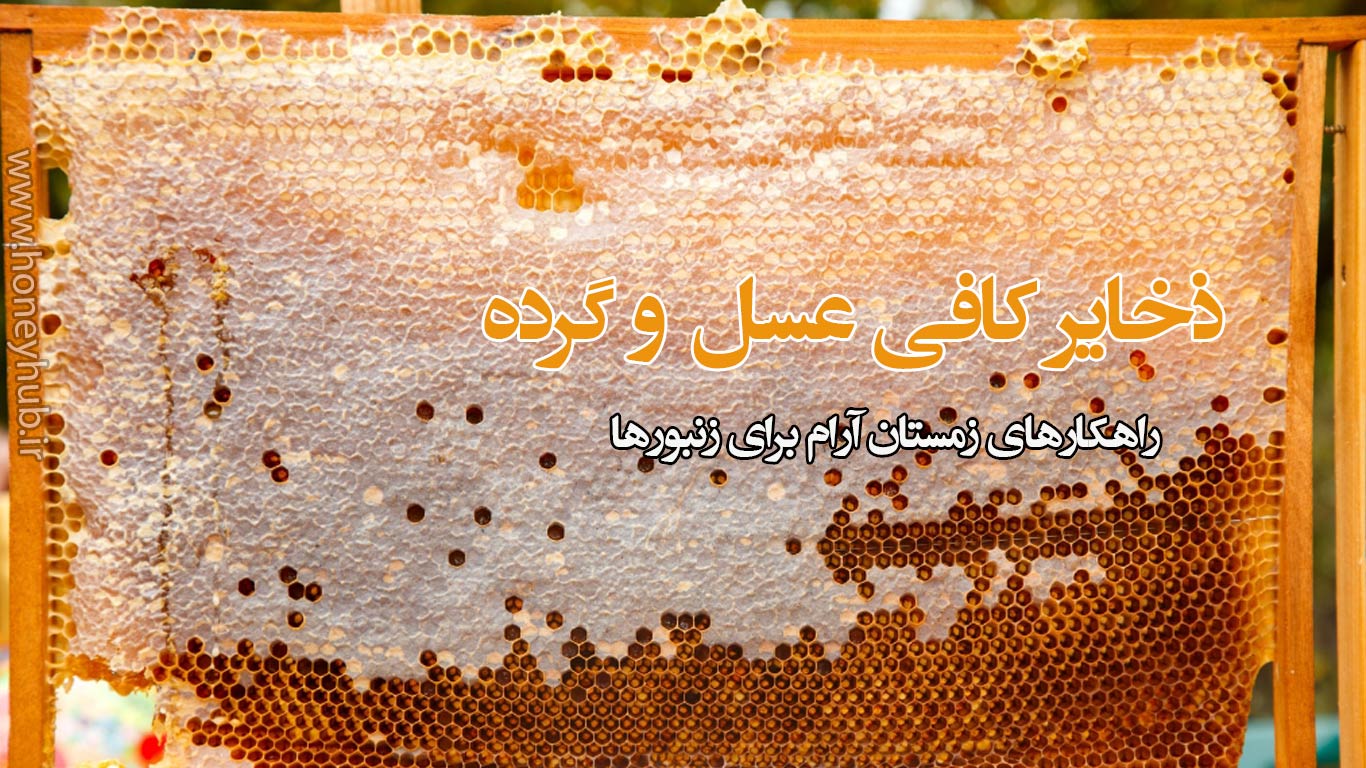
Honey in the comb is the best winter food for the colony, although colonies can get through winter seasons quite well with good sugar syrup. Since they can have more cleansing flights, honey bees in colonies located in warm climates can often survive on sugar syrup. If supplemental food must be provided, it should be given in sufficient quantities for bees to process and store in the comb. The tendency is for the winter cluster to move upward or sideways, but never downward. Food reserves should be on the sides of the cluster at lower depths and directly above the cluster at upper depths.
After brood rearing begins in late winter and early spring, the cluster is forced to remain in a position usually in the upper box equipment. Breaks in warm weather are essential for bees to move their reserves from surrounding frames closer to the brood nest.
Having quality reserves available and in the right position not only ensures a more successful winter but also helps reduce disease incidence. Nosema is probably the most serious brood disease in overwintering colonies. An infected colony at best results in a weak colony and at worst leads to colony death. Naturally, standard mite treatments should be performed as recommended. To study varroa mite control and treatment methods, refer to the post "Successful Integrated Varroa Mite Control."
Adequate Hive Moisture
Internal colony moisture stresses winter hives and may facilitate the onset of diseases like nosema and chalkbrood. For every 10 pounds of honey a colony consumes, about 3.5 liters of water is produced. A traditional recommendation is to ventilate colonies to allow moisture-laden air to escape.
The second common method is to prop up one end of the inner cover with stones, wooden sticks, or branches about 2.5 inches (65 mm) high and place the outer cover over the inner cover. If you're using flat board covers also called "migration covers," raise them like inner covers. Such upper openings allow air to escape and give bees a higher entrance if the lower entrance becomes blocked by dead bees, ice, snow, or leaves.
💧 Frost Diagnosis Rules:
- Light frost: Natural and indicates adequate ventilation
- Heavy frost and ice: Unacceptable—needs more ventilation
- Dripping water droplets: Dangerous—insufficient ventilation or poor ceiling insulation
Internal frost indicates ventilation adequacy. Some light frost in the colony isn't undesirable, but freezing and heavy ice is unacceptable. During warm periods, ice melts and cold water drips on the cluster. However, in cold weather, the opposite extreme is probably just as bad. Excessive ventilation leads to greater temperature fluctuations with increased cluster temperature and food consumption.
Sealing and Insulating Hives
In warm months, entrances are open so honey bees can come and go freely. However, in cold winter, bees have little interest in leaving the hive. They only need periodic cleansing flights. Therefore, a reduced flight entrance is essential to improve hive security and reduce airflow into the hive.
Sometimes you need to seal some entrances at the bottom of the hive and open them in upper areas. Lower entrances can be blocked by fallen snow and can be pathways through which small animals and meltwater enter the hive. Sealing the hive floor is a priority and should definitely be done to prevent excessive propolis buildup.
Insulating hives in winter is one way to conserve heat. Various methods are used, including special wraps. Wraps go around the sides of honey bee hive boxes. They stay on throughout winter. Hive covers may be dark-colored to warm the hive when there's little sun in winter. Various types of covers are also available to beekeepers. Covers insulate the sides or top of the hive. Insulated covers on top of the hive prevent heat loss from the top. Other special wraps can be placed over it and the entire honey bee hive wrapped for insulation. The best honey bee hive covers create at least a 10mm barrier between outside air and the outer surfaces of hive boxes.
💡 Climate-Based Recommendation:
These insulation recommendations are especially for areas that experience below-freezing and much colder temperatures. In mild climates, sealing might be sufficient, and you should save on extra insulation costs.
Should You Use a Heater or Not?
Heating hives has many benefits and advantages in beekeeping. Most importantly, it increases honey bee colony survival rates in winter. A beekeeping operation benefits from investing in hive heating. To prevent winter cluster starvation, beehive heaters can be used when heating is necessary. With periodic use, these heaters don't add to the total cost of running the beekeeping operation.
🔥 Pros and Cons of Using Heaters:
✅ Pros:
- Increased colony survival rates
- Prevents winter cluster starvation
- Helps maintain population for spring
❌ Cons:
- Maintenance and electricity costs
- Risk of deceiving bees and causing them to leave the hive
- Requires continuous monitoring
Choosing reasonably priced heaters and using them intermittently rather than constantly can help control costs including maintenance. It's recommended to use heaters during cold periods below 41°F (5°C). At higher temperatures, bees can likely manage on their own if they have good food reserves.
One of the fundamental problems with heaters is their poor quality or high maintenance costs. On the other hand, bees might be fooled by high hive temperatures and leave the hive, which causes them to die. Overall, it can be concluded that if reasonably priced heaters with low maintenance costs are available, during freezing and continuous snowfall, they can help beekeepers maintain their population for spring and start the hive strong for production. But in areas where you don't have much freezing, don't think too much about this device. Focus more on providing enough food for the hive.

Important Winter Tasks
📋 Inner Cover
As a management practice, inner covers should be flipped upside down during winter months. Note that not all inner covers have this reversible feature. The extra space under the inner cover gives bees more room to move above frames and transfer food reserves to different locations. However, the inner cover should be returned to its normal position immediately before the spring nectar flow begins. There's a risk of drawing comb in the extra space.
🚪 Reducing the Flight Entrance
Even if lower entrances are expected to be blocked by snow, ice, or leaves, they should still be reduced. Although hive entrance dimensions vary slightly, generally, entrance height shouldn't exceed 3/8 inch (about 1 cm). This height restricts cold wind entry and reduces heat loss while still allowing bees to exit for cleansing flights.
🧹 Cleaning the Entrance
Make sure the bottom entrance of the hive is open and remains unblocked throughout winter. Since bees die inside the hive... and die... they may accumulate at the entrance, blocking airflow and disrupting the ability of live bees to exit and perform necessary cleansing flights during warm periods.
Make it a habit to check your hives once a month and clean the lower entrances. (For this purpose, your flight entrance guard should be removable.) Keep a narrow stick handy that you can insert into the entrance to sweep out dead bees. Be careful not to bump the colony or create other disturbances, because when bees are disturbed, they break their clusters and may easily get too cold. Don't worry if the bottom hive entrance gets blocked by snow. Air moves through snow enough to supply the hive, and snow also helps reduce wind.
✅ Winter Tasks Checklist:
📚 Scientific References
- Seeley, T. D. (2019). The Lives of Bees: The Untold Story of the Honey Bee in the Wild. Princeton University Press.
- Honey Bee Suite. (2024). The remarkable amount of honey your bees need for winter. View full source
- Dadant & Sons. (2023). The Hive and the Honey Bee (Revised Edition). Hamilton, IL.
- Southwick, E. E., & Heldmaier, G. (1987). Temperature control of the winter cluster in honey bees. Journal of Comparative Physiology B, 157(5), 651-657.
- Stabentheiner, A., et al. (2010). Endothermic heat production in honeybee winter clusters. Journal of Experimental Biology, 213(2), 356-364.
🍯 Try Our Natural Honey
Pure orange blossom, sidr, and acacia honey—straight from our hives to your table
🍊 Orange Blossom Honey
🌳 Sidr Honey
🌸 Acacia Honey



Latest comments