




Explore the role of raw honey in functional nutrition. Learn about the antioxidant properties and synergy of premium...














Honey Proteins: A Comprehensive Analysis of Composition, Function, and Applications
Although honey proteins constitute less than 1% of its weight, they are the primary source of its quality, therapeutic power, and biological identity. They are the hidden secrets in every drop of honey.
Introduction: Beyond a Sweetener
Honey, the natural sweet substance produced by the honey bee (Apis mellifera), is a complex biological matrix composed mainly of carbohydrates and water. Although proteins make up a small fraction of honey's weight, they are the main determinants of its biological identity, quality, and therapeutic value. The honey proteome—the complete set of proteins present in it—is a rich and diverse collection of molecules that transforms flower nectar into stable honey, bestows it with extraordinary biological properties, and acts as a definitive fingerprint of its origin.
Where Do Honey Proteins Come From?
The protein profile of any honey is not a fixed characteristic but a dynamic biological signature influenced by factors such as its dual origin and the environmental conditions of its production.
1.1 Dual Origin: A Fusion of Bee and Plant
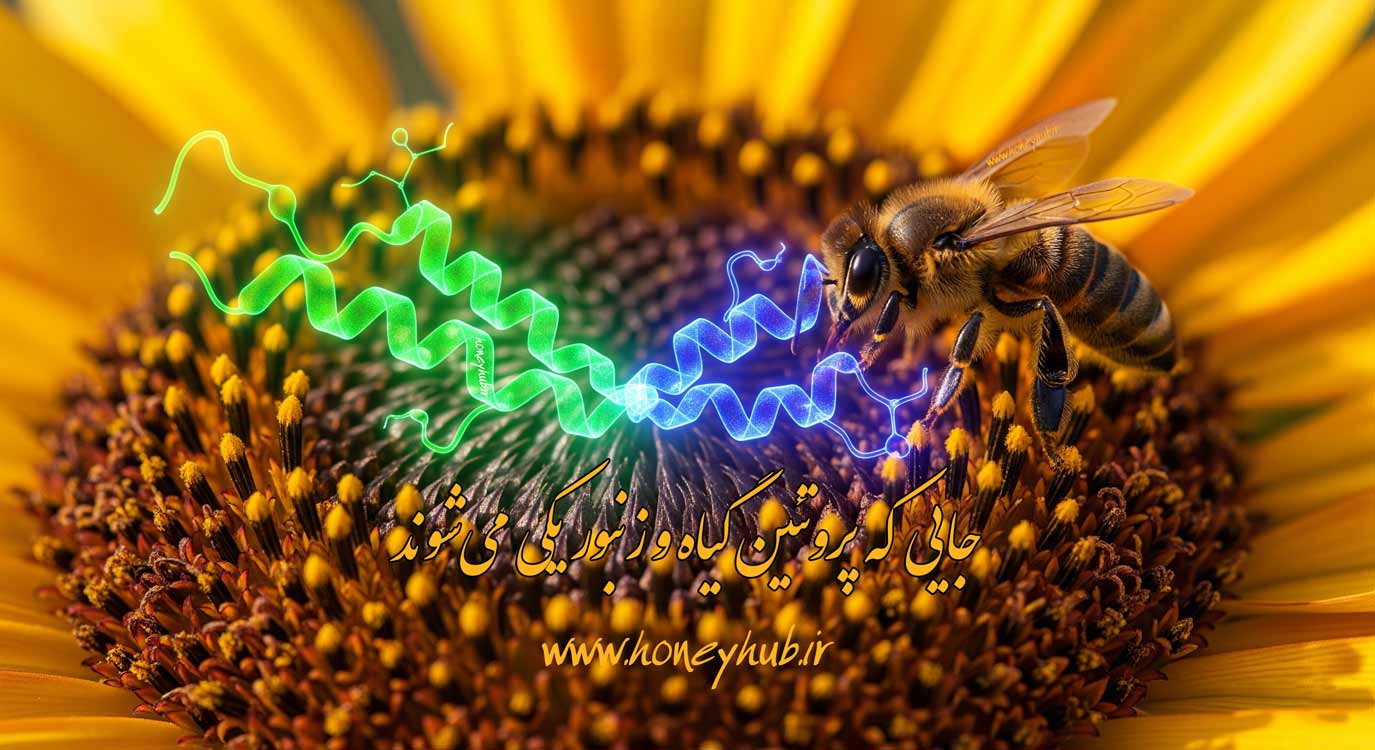
Honey proteins are a composite derived from two distinct biological sources: the honey bee and the floral sources it forages.
- Animal Origin (from the bee): The majority of proteins, approximately two-thirds, are secreted by the bee's glands during the process of concentrating nectar. This includes vital enzymes like invertase (which breaks down sucrose), diastase (which digests starch), and glucose oxidase (which produces hydrogen peroxide), as well as Major Royal Jelly Proteins (MRJPs) and antimicrobial peptides.
- Plant Origin (from pollen and nectar): The remaining one-third comes from plant sources, mainly pollen grains. Its amount varies greatly depending on the flower type and season. Even if the pollen is filtered, its proteins often remain in the honey matrix.
A New Criterion for Quality: The ratio of pollen protein to total protein has become a powerful tool to combat adulteration. A proposed ratio of ≥0.2 can be a standard for natural, high-quality honey, as fraudulent sweeteners cannot replicate this complex proteome.
1.2 Quantitative Analysis: Low Concentration, High Impact
Although proteins are a small part of honey's weight (typically 0.1% to 0.5%), their biological impact is profound. This concentration is highly variable and directly linked to the honey's origin. For example, honey collected during peak flower bloom has more pollen and consequently, more protein.
1.3 The Influence of Climatic and Geographical Features
Honey also has a specific fingerprint and "terroir." The unique combination of floral source, geographical location, climate, and season creates a distinct environmental fingerprint in its proteome.
- Floral Origin: This is the most important factor. Monofloral honeys (like eucalyptus or chestnut) have distinct protein patterns used for authentication.
- Geographical and Climatic Impact: Even with the same bee species, honey from different regions will have different protein profiles due to local flora.
- Seasonal Variations: The time of year determines which plants are blooming, affecting the pollen count and protein content. Spring pollens are often richer in essential amino acids.
The Function of Honey Proteins
Despite their low volume, proteins are the main drivers of honey's biochemical identity. They are a precise collection of enzymes, structural proteins, and defense molecules.
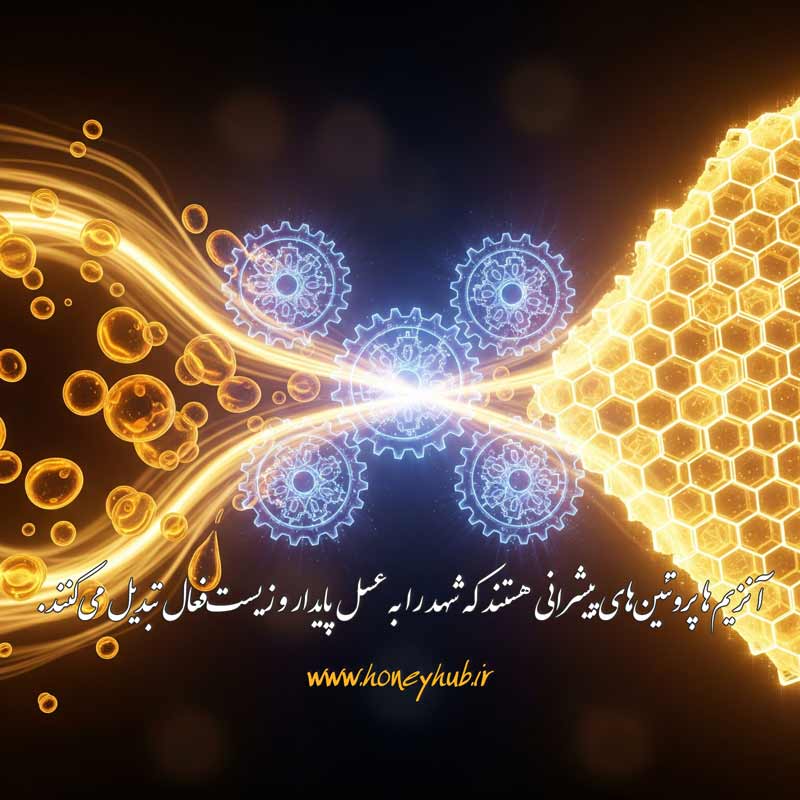
2.1 The Catalytic Core: Foundational Enzymes
Enzymes secreted by the bee transform perishable nectar into stable honey. Their activity level is a key indicator of honey's freshness and authenticity.
- Invertase (Sucrase): Converts sucrose into glucose and fructose, creating high osmotic pressure that preserves the honey. Its activity is a prime indicator of freshness.
- Diastase (Amylase): Digests pollen starch. Its activity level (diastase number) is a legal quality standard to detect heating or aging.
- Glucose Oxidase: When honey is diluted, this enzyme produces hydrogen peroxide and gluconic acid, which cause honey's acidity (low pH) and potent antiseptic properties.
- Catalase: Breaks down hydrogen peroxide to keep its level effective but non-toxic, which is vital for wound healing.
2.2 The Royal Contribution: Major Royal Jelly Proteins (MRJPs)
MRJPs are the signature proteins of royal jelly but are also consistently found in honey. MRJP1 (Royalactin) is often the most abundant single protein. In honey, they contribute to antimicrobial and immunomodulatory effects and act as markers of authenticity.
2.3 Table 1: Summary of Key Protein Families
| Protein Family | Specific Examples | Main Function in Honey | Importance for Quality & Bioactivity |
|---|---|---|---|
| Metabolic Enzymes | Invertase, Diastase, Glucose Oxidase | Nectar conversion, creating a preservative environment, H₂O₂ production. | Their activity level is a legal indicator of freshness, quality, and heat treatment. |
| Major Royal Jelly Proteins (MRJPs) | MRJP1 (Royalactin), MRJP2 | Nutritional, immunomodulatory, antimicrobial. | Contribute to bioactivity and serve as authenticity markers. |
| Antimicrobial Peptides (AMPs) | Bee defensin-1, Hymenoptaecin | Directly kill a wide range of microbes. | A primary source of honey's non-peroxide medicinal properties. |
| Allergenic Proteins | MRJP1 (Api m 1), MRJP2 | Can trigger IgE-mediated allergic reactions. | Crucial for food safety and clinical diagnosis. |
Therapeutic Applications from Traditional Medicine to Modern Medicine
The historical use of honey in medicine is now being confirmed by science, showing that its proteins are active pharmacological agents, especially in wound management and immune system regulation.

3.1 How Honey Heals Wounds: A Protein-Driven Process
- Antimicrobial Action: A dual attack using hydrogen peroxide (from glucose oxidase) and antimicrobial peptides (like defensin-1) to clear infection, even against resistant strains like MRSA.
- Anti-inflammatory Effects: Reduces swelling, pain, and exudate by inhibiting the production of inflammatory molecules and neutralizing harmful free radicals.
- Stimulation of Tissue Repair: Signals immune cells to release cytokines (like TNF-α) that guide healing, promote the removal of dead tissue, and stimulate the growth of new blood vessels.
3.2 Immune System Regulation: The Role of Glycoproteins
Honey proteins act as immunomodulators, meaning they can regulate the immune response. They can stimulate an immune response when needed (e.g., in an infection) and calm it down when it is harmful (e.g., in chronic inflammation).
Factors That Degrade Honey Quality
There is a fundamental conflict between commercial goals (shelf life, appearance) and preserving the delicate biological integrity of honey. Understanding this is crucial for consumers.

4.1 The Effects of Pasteurization (Heating)
Heating is common to prevent fermentation and crystallization. However, it leads to:
- Protein Denaturation: Heat destroys the essential 3D structure of enzymes, obliterating their biological activity.
- Loss of Bioactivity: The inactivation of glucose oxidase eliminates the peroxide-based antimicrobial power.
- HMF Formation: Heat increases hydroxymethylfurfural (HMF), a key indicator of excessive heating or aging.
4.2 The Consequences of Ultrafiltration
Aggressive filtration is used to remove microscopic particles like pollen to delay crystallization. This practice:
- Removes Key Components: It strips the honey of pollen, a primary source of plant proteins, amino acids, and phytonutrients.
- Hinders Authenticity Checks: By removing pollen, the botanical and geographical origin of the honey becomes untraceable, which can conceal fraud.
What is "Raw Honey"? This term generally refers to honey that has not been heated above the natural temperature of the hive (about 35°C or 95°F) and has only been strained to remove large impurities, not ultrafiltered. This preserves its full spectrum of bioactive proteins and enzymes.
Frequently Asked Questions About Honey Proteins
What is the most important protein in honey?
It depends on the context! For honey production and stability, enzymes like invertase are the most critical. For medicinal and antibacterial properties, glucose oxidase and antimicrobial peptides like bee defensin-1 are most important. For nutritional and immunomodulatory effects, Major Royal Jelly Proteins (MRJPs) are key.
Why is raw honey better than clear supermarket honey?
The clear, liquid honey found in most supermarkets has almost certainly been pasteurized (heated) and ultrafiltered. This process destroys or removes the valuable, heat-sensitive enzymes and proteins responsible for many of honey's health benefits. Raw honey is not processed with high heat and is only lightly strained, thus retaining its full bioactive profile.
What is HMF and why is it important?
Hydroxymethylfurfural (HMF) is a compound that forms when sugars are heated in the presence of acid. It is nearly absent in fresh honey, but its concentration increases over time and, more significantly, with exposure to heat. Therefore, a high HMF level is a clear indicator that honey has been overheated or is very old, meaning its valuable enzymes have likely been destroyed.
Can I be allergic to honey?
Yes, although it's rare. Honey allergies are usually caused by bee-derived proteins, especially MRJP1 and MRJP2. In some cases, allergies can also be triggered by specific types of pollen present in the honey. Symptoms can range from mild to severe.



Latest comments