
Learn to bake the famous Medovik layer by layer. This classic Russian dessert, with its soft honey biscuit and creamy...

Comprehensive Atlas of Nectar Plants for Beekeeping in Sabalan Region - Scientific Guide for Beekeepers
Sabalan Beekeeping Botany Atlas
Introduction: The Unique Majesty of Sabalan—A Fusion of Fire and Ice
Mount Sabalan is not just a mountain massif; it is a distinct and exceptional terroir for beekeeping. This report examines the intricate interplay between its volcanic geology, cold high-altitude ecosystems (glaciers), and unique continental climate, arguing that these macro factors provide a highly specialized environment for producing world-class quality honey. Sabalan, the third-highest mountain in Iran at 4,811 meters, is a large andesitic stratovolcano whose volcanic activities have led to the formation of fertile soils, a key factor in the growth of its rich vegetation.
The high peaks of this mountain host seven permanent glaciers which, along with seasonal snowmelt, provide stable water sources to nourish the valleys and slopes. This feature distinguishes Sabalan from many other arid mountain ranges in Iran. Due to this rich and unique vegetation, the region is explicitly recognized as one of the most important centers for beekeeping and medicinal plant production in Iran. Sabalan’s biodiversity, which includes alpine and sub-alpine ecosystems rich in plant species, has been registered as a national treasure.
A defining characteristic of Sabalan’s beekeeping value is the direct causal chain extending from its geological past to the present-day quality of its honey. The volcanic soil of this region is not just fertile; it imparts a distinct mineral profile to the soil and water. This, in turn, influences the phytochemical composition of the nectar produced by native plants and directly contributes to the flavor, aroma, and potential therapeutic properties of Sabalan honey. This concept of geological terroir is the central theme of this report. For example, the presence of various minerals and rocks such as andesite, basalt, and trachyte in the region’s geological substrate is absorbed by plants like Astragalus (Gond) and becomes concentrated in their nectar as rich minerals like iron and manganese. This process ultimately leads to the production of honey with unique mineral characteristics, providing a scientific basis for marketing claims about the quality of Sabalan honey.
Furthermore, the simultaneous presence of permanent glaciers at altitudes above 4,000 meters and mineral hot springs on the slopes creates steep temperature and humidity gradients over short distances. This phenomenon leads to the formation of a compressed variety of micro-habitats, allowing a wide range of nectar-producing plants to coexist—from species that require cool, moist conditions near glacier-fed streams to those that thrive in warmer, mineral-rich soils adjacent to hot springs. This habitat diversity maximizes the forage variety for bees, which is why the region has a high species richness, invaluable for producing complex polyfloral honeys.
The Sabalan Beekeeping Landscape: Environments and Regions
This section begins with a detailed analysis of the physical environment of Sabalan, structured around the distinct vegetation zones along its slopes. We will explain how altitude, climate, and soil have created a tiered system of forage resources that dictates the practice of migratory beekeeping in the region.
1.1. Geoclimatic Foundation
Geology and Soil: A deeper look at the volcanic parent materials (andesite, tuff, pumice) and their erosion into fertile, mineral-rich soils provides the foundation for the growth of dense vegetation.
Climatic Profile: The region has a continental climate with hot, dry summers and very cold, snowy winters.1 Annual precipitation ranges from 400 to 700 mm, primarily as snow, and significant temperature gradients are observed at different altitudes. The pleasant and cool summers in areas like Ardabil, which are influenced by the mountain’s microclimate, create ideal conditions for bee activity, while other regions might be too hot.
1.2. Altitudinal Vegetation Zones and Their Beekeeping Importance
This subsection classifies the region's flora based on altitude and provides practical guidance for beekeepers.
- Foothills and Lower Slopes (below 2,300 m): This zone is dominated by steppe plants, agricultural lands (wheat), and villages. This area provides early spring forage but may also pose risks due to agricultural pesticide use.
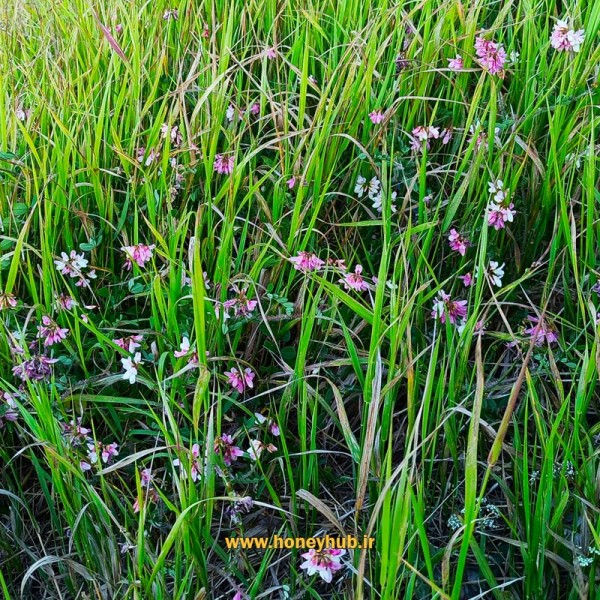
- Mountain Zone (2,300 to 3,200 m): This area is characterized by rich pastures and the highest density of nectar-producing plant diversity. Research shows that the highest species diversity, richness, and evenness are found in the altitudinal range of 2,200 to 3,200 meters. This zone is the primary summer pasture for beekeeping. Key plant communities like Astragalus-Festuca-Trifolium (Gond-Sheep's Fescue-Clover) have been identified at these altitudes.
- Sub-alpine and Alpine Zones (above 3,200 m): This area is dominated by alpine wetland flora, cushion plants like Acantholimon and resilient grasses such as Festuca ovina (Sheep's Fescue). Although overall diversity decreases at these altitudes, this region provides late-season nectar from highly adapted and specialized plants, extending the bee foraging season. The highest altitude from which plant samples were collected was 4,480 meters.
The seasonal migration of beekeepers in Sabalan is not merely a tradition but a highly complex ecological strategy. This migration is a direct response to the phenological wave—the successive blossoming of plants as spring and summer temperatures rise along the mountain slopes. Beekeepers essentially follow this wave of nectar availability from the foothills in spring to the alpine pastures in late summer. This approach is a calculated exploitation of the mountain’s four-dimensional (space + time) resource landscape.
The dominance of hemicryptophyte (54%) and therophyte (22%) life forms is a critical indicator of the region's suitability for beekeeping. Hemicryptophytes (perennial plants with buds at the soil surface) ensure a reliable annual return of forage, while therophytes (annuals) can rapidly colonize disturbed areas and provide opportunistic nectar resources. This combination guarantees stability and resilience in forage supply.
Key Nectar-Producing Flora: The Pillars of Sabalan Honey
This main section provides comprehensive botanical and beekeeping profiles of the most important honey-producing plants in Sabalan. Each profile acts as a detailed datasheet for beekeepers and researchers. This section begins with a quick reference table for easy access.
| Scientific Name | Common Name (Persian/Local) | Family | Main Source | Flowering Period (Months) | Typical Altitudinal Range (m) | Honey Potential |
|---|---|---|---|---|---|---|
| Thymus kotschyanus | Mountain Thyme | Lamiaceae (Mint Family) | Nectar | June - August | 2500 - 3500 | High |
| Astragalus spp. | Gond | Fabaceae (Legume Family) | Nectar & Pollen | June - August | Widespread (1500 - 4000) | High |
| Echinops spp. | Globe Thistle | Asteraceae (Daisy Family) | Nectar & Pollen | July - September | 1800 - 3000 | High |
| Salvia spp. | Sage | Lamiaceae (Mint Family) | Nectar | June - July | 1500 - 2800 | Medium |
| Trifolium repens | White Clover | Fabaceae (Legume Family) | Nectar & Pollen | June - August | 2200 - 3300 | High |
| Onobrychis viciifolia | Sainfoin | Fabaceae (Legume Family) | Nectar & Pollen | May - July | 1500 - 2500 | High |
| Cirsium & Carduus spp. | Thistle | Asteraceae (Daisy Family) | Nectar | June - September | 1500 - 3000 | High |
| Centaurea spp. | Knapweed | Asteraceae (Daisy Family) | Nectar | June - September | 1000 - 2500 | Medium |
| Achillea spp. | Yarrow | Asteraceae (Daisy Family) | Nectar & Pollen | June - September | Widespread (1500 - 3500) | Medium |
| Gundelia tournefortii | Kenger | Asteraceae (Daisy Family) | Nectar & Pollen | April - June | 1000 - 3000 | Medium |
| Stachys byzantina | Lamb's Ear | Lamiaceae (Mint Family) | Nectar | May - July | 1500 - 2500 | Low |
2.1. Lamiaceae (Mint Family): The Aromatic Heart of Sabalan
This family can be considered the most important factor in the aromatic quality of Sabalan honey. A study on the medicinal plants of Sabalan found that the Mint family, with 33 species, is one of the dominant families in the region, many of which are aromatic and attractive to bees.
Thyme (Thymus spp., especially T. kotschyanus)
Botanical Description: A perennial, aromatic, low-growing subshrub.
Habitat: Widely found in mountain and sub-alpine pastures.
Flowering Calendar: Flowers from mid-June to the end of the warm summer months, often providing the main nectar flow. Honey harvest time is typically from early July to late August.
Beekeeping Value: A primary and vital nectar source. Its mono-floral honey is highly prized for its strong aromatic properties and therapeutic benefits. This honey is known for its warm and dry nature, dark amber color, and a pungent, slightly bitter taste due to its high thymol concentration.
Sage (Salvia spp.)
Botanical Description: Perennial herbaceous plants with distinctive two-lipped flowers.
Habitat: Dry pastures and slopes.
Flowering Calendar: Long flowering period, often throughout the summer. The species Salvia officinalis flowers for more than 30 days from June to July.
Beekeeping Value: An excellent honey plant that produces abundant nectar. Honey production potential for S. officinalis can reach 120-130 kg per hectare. Its nectar is very attractive to bees and butterflies.
Lamb's Ear (Stachys byzantina)
Botanical Description: A perennial plant with soft, silvery-gray, woolly leaves.
Habitat: Common in gardens and can grow wild in sunny, well-drained locations.
Flowering Calendar: Flowers on tall stalks in late spring or early summer (May to July).
Beekeeping Value: Although primarily grown for its leaves, its purple/pink flowers are attractive to bees. It provides a secondary nectar source during the transitional period of early summer.
2.2. Fabaceae (Legume Family): The Colony Growth Engine
This family is vital for both nectar and high-quality pollen, which is essential for brood rearing and colony strengthening. This family is recognized as one of the dominant families on the northern slopes of Sabalan and a key family for beekeeping in Ardabil province.
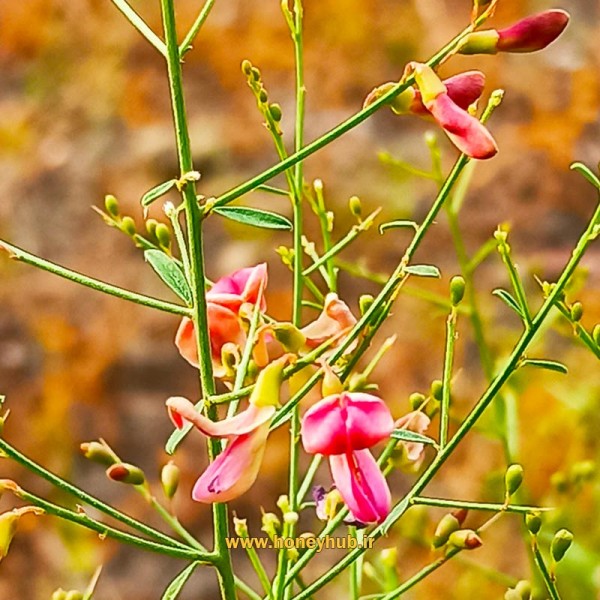
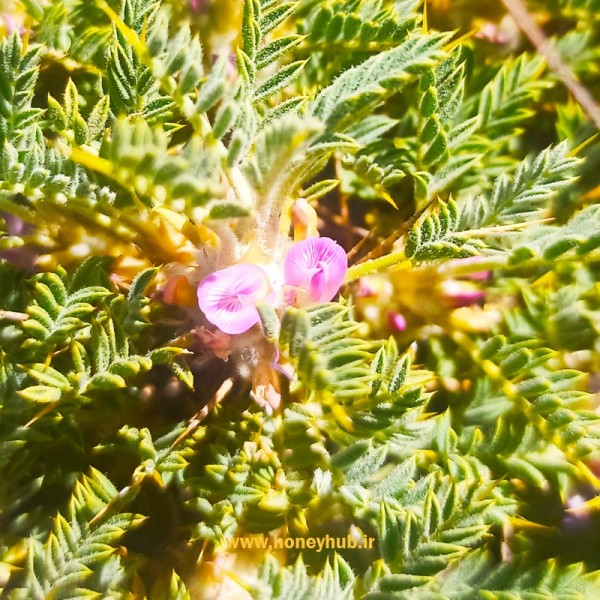
Astragalus (Astragalus spp.)
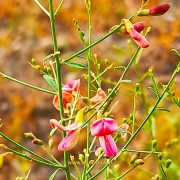
Botanical Description: The largest plant genus in Iran with over 800 species, many of which are endemic. These plants are typically perennial herbs or thorny cushion-like shrubs. Astragalus, with 10 species identified in one study, is the key genus in the region.
Habitat: Widely distributed across all Sabalan pastures, from foothills to high altitudes.
Flowering Calendar: Long and varied flowering period depending on the species and altitude, generally from June to early August. The main honey harvest is from early July to late August.
Beekeeping Value: The most important honey-producing plant genus in many parts of Iran. It produces large volumes of light-colored, mild-flavored honey that crystallizes slowly. It is a vital source of both nectar and pollen. Sabalan Astragalus honey is known for its high mineral content (iron, manganese) and immune-boosting properties.
Clover (Trifolium spp., especially T. repens)
Botanical Description: A low-growing, perennial herbaceous plant common in pastures.
Habitat: Found in mountain meadows and pastures, often alongside Festuca and Astragalus.
Flowering Calendar: Flowers throughout the summer.
Beekeeping Value: A classic and excellent honey plant. Pollination by honeybees is essential for its seed production, indicating a strong symbiotic relationship. Its honey production can be very high, with some studies reporting a potential of over 100 kg per hectare.
Sainfoin (Onobrychis viciifolia)
Botanical Description: A perennial forage legume.
Habitat: Prefers dry, calcareous soils.
Flowering Calendar: Indeterminate flowering for several weeks during the summer.
Beekeeping Value: A superb plant for honeybees, which is specifically cultivated for honey production in some regions. It is a producer of large quantities of high-quality nectar and pollen. It requires 2-3 honeybee colonies per hectare for optimal seed set pollination, demonstrating its high value to bees.
2.3. Asteraceae (Daisy Family): The Late-Season Powerhouse
This family, with 31 species in one study in Sabalan and 46 medicinal species in another, is the most dominant family in terms of species count in Sabalan and Ardabil province. This family provides vital late-summer and autumn forage.
Globe Thistle (Echinops spp.)
Botanical Description: Spiny perennial plants with spherical flower heads. 4 species of this genus are identified, many of which are endemic.
Habitat: Common in mountain pastures and dry, sunny plains.
Flowering Calendar: A vital late-season plant. It flowers in spring in warmer areas, but in mountainous regions like Sabalan, flowering continues until August.
Beekeeping Value: Considered one of the most important plants for beekeeping in Iran’s mountain pastures, producing abundant nectar and pollen when other sources are scarce. Its honey is sometimes marketed as Zul Honey.
Knapweed (Centaurea spp.)
Botanical Description: A large genus of thistle-like plants. Centaurea cyanus (Cornflower) is a well-known honey plant. The species Centaurea iberica is also widespread in the region.
Habitat: Roadsides, fields, and pastures.
Flowering Calendar: Summer (June to September).
Beekeeping Value: A major nectar source worldwide, producing a mild honey with a distinct anise/almond aroma. Its nectar is very sweet (34% sugar) and production is high.
Thistle (Cirsium & Carduus spp.)
Botanical Description: Spiny herbaceous plants. Cirsium arvense is a major nectar producer.54 The species Carduus crispus is also pollinated by bees.
Habitat: Open, mesophytic areas, pastures.
Flowering Calendar: Long flowering season from mid-June to September.
Beekeeping Value: An excellent nectar source that produces a high-quality, light-colored honey comparable to clover honey. Each flower head of C. arvense produces a very large amount of nectar.
Yarrow (Achillea spp.)
Botanical Description: An aromatic perennial plant with corymbose (flat-topped clusters) flower heads of small flowers. The genus is well-represented in Sabalan with 6 medicinal species.
Habitat: Common in grasslands and pastures.
Flowering Calendar: Long flowering season from early summer to autumn (June to September).
Beekeeping Value: Highly attractive to a wide range of bees due to the easy access to nectar and pollen on its flat-topped flower heads.61 It provides a steady food source when other flowers are fading. Its pollen is light green.
Kenger (Gundelia tournefortii)
Botanical Description: A spiny perennial plant similar to a thistle.
Habitat: Mountain plains up to 3,000 meters. Widespread in western and northwestern Iran.
Flowering Calendar: Spring, typically from April to June.
Beekeeping Value: Produces nectar and pollen-rich flowers that are attractive to bees. Its early and vigorous bloom provides a crucial bridge forage between early spring and the main summer nectar flow.
Supportive Flora and Seasonal Pollen Sources
This section covers plants that play a crucial supportive role for bee colonies, even if they are not a primary source for surplus honey production. Their importance lies in providing diverse nutrition and sustaining colonies during periods of nectar scarcity. A study on Sabalan's medicinal plants identified 111 species beneficial to honeybees.
3.1. Early Spring Buildup (February - April)
- Rosaceae (Rose Family): Includes fruit trees like almond, apricot, apple, and pear, which are vital for providing early pollen and nectar to stimulate queen laying and colony growth.
- Brassicaceae (Mustard Family): Species like Brassica napus (canola) in the lower plains provide an intense but short nectar flow.
- Apiaceae (Carrot Family): Species like Heracleum persicum (Persian hogweed), mentioned in Ardabil, offer valuable resources.
3.2. Mid-Summer Diversity (June - August)
- Malvaceae (Mallow Family): Species like Malva pusilla (dwarf mallow) and Malva sylvestris (common mallow) are common and visited by bees.
- Boraginaceae (Borage Family): An important family for bees that provides nectar-rich flowers.
- Scrophulariaceae (Figwort Family): Includes plants like Verbascum thapsus (Mullein) which attracts bees and produces pollen and nectar.
3.3. Late-Season and Autumn Forage (September - October)
- Late-blooming Asteraceae species continue to provide forage.
- Cultivated crops like Medicago sativa (alfalfa), if allowed to flower, can provide a late nectar flow.
The concept of food security for a bee colony relies on this secondary flora. While the main flora provides carbohydrates (nectar) for surplus honey production, diverse pollen from supportive plants offers a wider range of amino acids, lipids, and micronutrients. This results in healthier, more resilient colonies that are better able to withstand diseases and winter stress. The high diversity of plant families available in Sabalan ensures that bees can forage for different types of pollen, balancing their diet throughout the year. This biodiversity is the hidden key to the strength of Sabalan's bee populations.
The Beekeeper's Calendar: Mapping the Sabalan Nectar Flow
This section is the most practical and applied part of the atlas. It integrates all phenological data into a visual, month-by-month calendar, cross-referenced with altitude, to guide beekeepers in optimal hive placement and movement.
| Month / Altitudinal Zone | February - April | May - June | July - August | September - October |
|---|---|---|---|---|
| Foothills (<2,300 m) | Initial colony buildup • Brassicaceae (Brassica spp.) • Rosaceae (fruit trees) | Start of nectar flow • Gundelia tournefortii (Kenger) • Onobrychis viciifolia (Sainfoin) • Early Astragalus species | Secondary nectar flow • Centaurea spp. (Knapweed) • Medicago sativa (Alfalfa) | Final forage • Late-blooming Asteraceae species |
| Mountain Zone (2,300 - 3,200 m) | Snow-covered | Start of upward migration • Mid-altitude Astragalus species • Trifolium repens (Clover) • Stachys byzantina (Lamb's Ear) | Main nectar flow (honey harvest) • Thymus spp. (Thyme) • Astragalus spp. (Gond) • Cirsium & Carduus spp. (Thistle) | Late-season nectar flow • Echinops spp. (Globe Thistle) • Achillea spp. (Yarrow) |
| Alpine Zone (>3,200 m) | Snow-covered | Snow-covered / Snowmelt begins | High-altitude nectar flow • Alpine Astragalus species • Alpine wetland flora | Final forage • Late-blooming, resilient alpine species |
Color Guide: Gold: Dominant Nectar; Green: Nectar & Pollen; Yellow: Dominant Pollen.
Seasonal Strategy Analysis
- Early Spring (February - April): Focus on foothills. Primary Goal: Colony strengthening and growth. Key Forage: Brassica, Rosaceae fruit trees, early wild flowers.
- Late Spring (May - June): Begin migration to lower mountain zones (2,300-2,600 m). Primary Goal: First surplus honey harvest. Key Forage: Gundelia tournefortii, early Astragalus species, Onobrychis viciifolia.
- Peak Summer (July - August): Settle in mid-to-high mountain zones (2,600-3,700 m). Primary Goal: Main honey harvest. Key Forage: Peak bloom of Thymus spp. and diverse Astragalus species. This period represents the "classic Sabalan honey."
- Late Summer/Early Autumn (Late August - September): Move to the highest accessible pastures or remain in high mountain zones. Primary Goal: Late honey harvest and final winter preparation. Key Forage: Echinops spp., Cirsium spp., and other late-blooming Asteraceae species.
Plants of Concern: Risks and Considerations for Beekeeping
This vital section addresses potential threats to bee health and honey safety from non-nectar-producing or toxic plants. It provides identification guides and risk assessments based on known distribution.
| Scientific Name | Common Name (Persian) | Family | Toxic Compound | Effect on Bees | Effect on Honey | Distribution in Northern Iran | Risk Level for Sabalan |
|---|---|---|---|---|---|---|---|
| Atropa belladonna | Shabizak, Belladonna | Solanaceae (Nightshade Family) | Tropane Alkaloids | - | Toxic to humans | Gilan, Mazandaran, Gorgan | Low (requires vigilance) |
| Rhododendron spp. | Indian Oleander | Ericaceae (Heath Family) | Grayanotoxins | Toxic | Toxic to humans ("mad honey") | Northern (Hyrcanian) Forests | Very Low / Unconfirmed |
| Peganum harmala | Espand | Nitrariaceae | Beta-carboline alkaloids | Potential sub-lethal effects | Pollen contamination | Widespread in dry areas | Medium (in foothills) |
| Datura stramonium | Tatoureh | Solanaceae (Nightshade Family) | Tropane Alkaloids | Potentially toxic | - | Widespread (weed) | Medium (in agricultural areas) |
Toxic Plant Profiles
- Atropa belladonna (Deadly Nightshade):
Identification: Perennial herb, ovate leaves, purple-black berries.
Toxicity: Contains tropane alkaloids (atropine, scopolamine). Its nectar can be collected by bees, leading to honey that is toxic to humans. Contact with and consumption of the plant are highly poisonous.
Distribution and Risk: Native to some regions including Iran. Specifically recorded in Gilan, Mazandaran, and Gorgan provinces. The risk for Sabalan is assessed as low but requires vigilance. While its presence has not been directly recorded in Sabalan's pastures, its existence in adjacent northern provinces means beekeepers migrating from those areas should be cautious.
- Rhododendron spp. (Indian Oleander):
Identification: Evergreen shrubs with large, showy flowers.
Toxicity: Contains grayanotoxins (andromedotoxins). Its nectar and pollen are toxic to bees and produce "mad honey," which is poisonous to humans.
Distribution and Risk: Native to southern Europe and southwest Asia. Although some species grow in the northern forests of Iran, there is no evidence in the provided research of Rhododendron ponticum or other grayanotoxin-containing species being present in Sabalan’s dry, continental, and high-altitude ecosystem. The risk is assessed as very low / unconfirmed. This is a crucial clarification to prevent misinformation.
- Peganum harmala (Wild Rue):
Identification: Perennial herbaceous plant common in saline soils and temperate desert regions.
Toxicity: Contains beta-carboline alkaloids. While not explicitly listed as toxic to bees, its potent alkaloids and weedy nature in dry areas warrant caution.
Distribution and Risk: Widespread in Iran. Its preference for dry, saline soils means it could be present in Sabalan’s lower foothills. The risk for sub-lethal effects or pollen contamination is medium.
- Datura stramonium (Jimsonweed):
Identification: A weed from the nightshade family.
Toxicity: Contains tropane alkaloids. It has been reported as potentially toxic to bees.
Distribution and Risk: A widespread weed. It can be present in disturbed soils around agricultural areas in the foothills. The risk in low-lying, cultivated zones is medium.
A World of Natural Flavors Awaits!
Visit our honey hive now and experience the sweetness of health.
Shop Now 🍯
Leave a comment
Log in to post comments
Related posts
Honey Hub, a treasure trove of nature's amazing products
Why does pollen improve your health?


Latest comments